 |
 |
|
|
|
CLICK HERE FOR THE TABLE OF CONTENTS PAGE AND LINKS TO ALL PAGES ON THIS SITE TABLE OF CONTENTS HISTORY THE TIMELINE MANUFACTURER'S HISTORIES THE PATENT PAGES THE PRE-ELECTRIC ERA VINTAGE ADVERTISING THE LIGHT SET GALLERIES RELATED LINKS FREQUENTLY ASKED QUESTIONS The Timeline Especially important events are highlighted in GREEN. |
||
| DATE | SIGNIFICANT EVENT | CLICK TO ENLARGE PICTURE |
| 1882 |
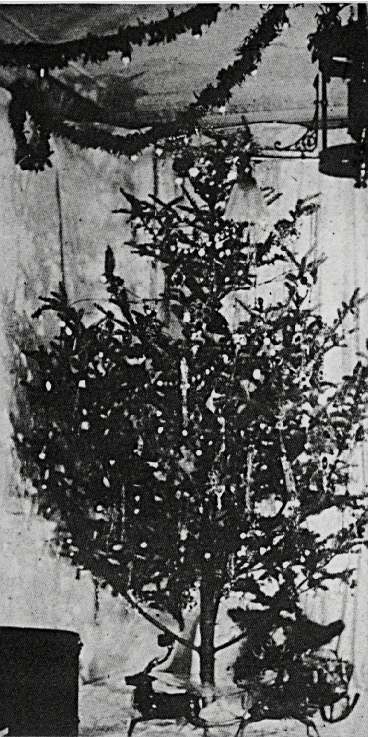
Edward Johnson, a business associate of Thomas Edison, electrically lights a Christmas tree for the first time. |
|
| 1892 |
The General Electric Company was founded. The Company bought the patent rights to Edison's light bulb and his light bulb factory. |
|
| 1895 |
The first electrically lighted Christmas tree was displayed in the White House. This event was instrumental in bringing the wonder of electric Christmas tree lighting to the general public's awareness. |
|
| 1898 |
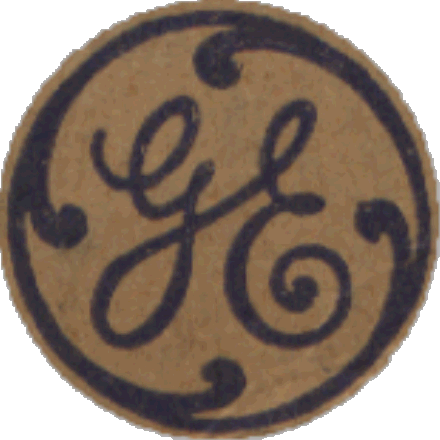
General Electric used their famous logo, the script GE letters in a circle, for the first time. It was registered on September 18, 1900. |
|
| 1901 |
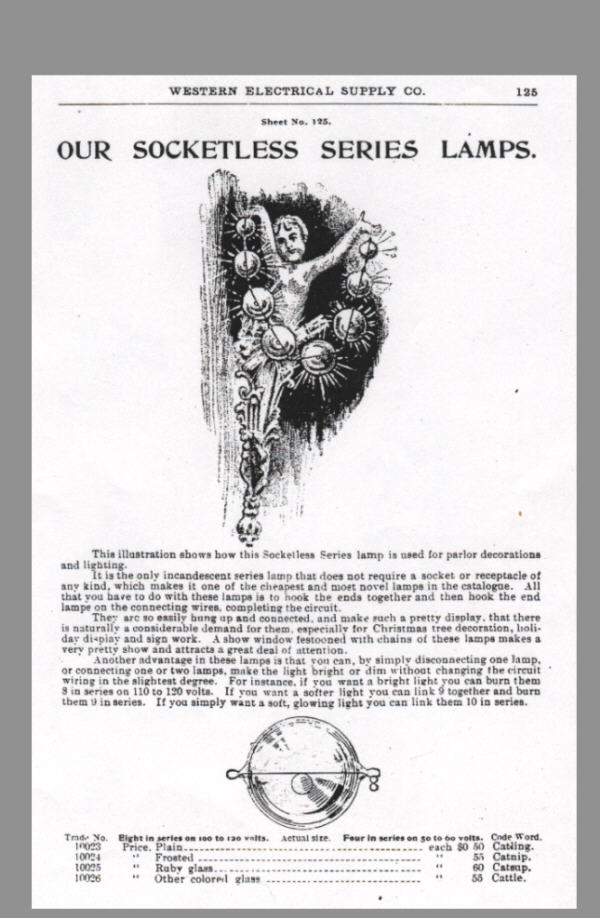
The first commercially available light sets are offered, but mainly to businesses interested in attracting attention in their storefront windows. These sets were socketless, and had to be hand wired. |
 |
| 1903 |
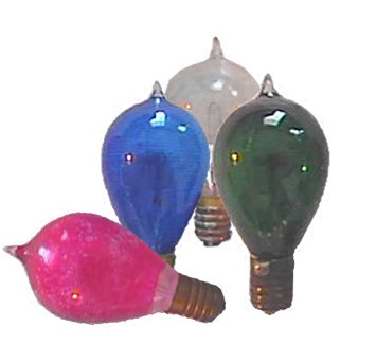
The first sets of pre-wired lights intended for Christmas trees were offered to the public by General Electric. The outfits included miniature base Edison carbon filament lamps, with prominent exhaust tips at the top of the glass envelopes, and a socket string manufactured by The American Ever Ready Company. |
 |
| 1905 |
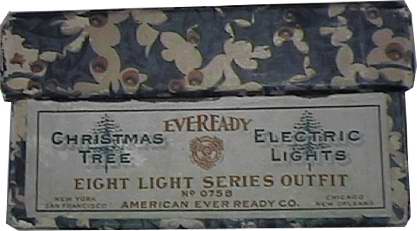
The American Ever Ready Company sells their first Christmas lighting sets under their own name. The company tried to patent their lighting strings but eventually failed. Ever Ready made light sets under this name from 1905 until the merger with the National Carbon Company resulted in the discontinuance of lighting outfits by that company in 1920. This is the same company producing Eveready batteries today. |
 |
| 1907 |
Tungsten was first used for light bulb filaments, but was not yet utilized in Christmas tree lamps. |
 |
| 1909 |
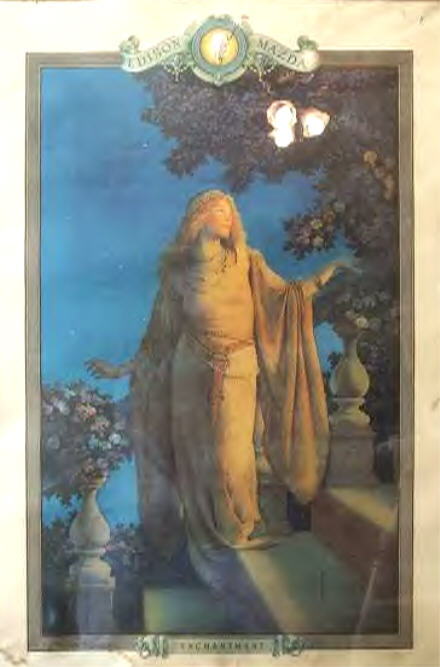
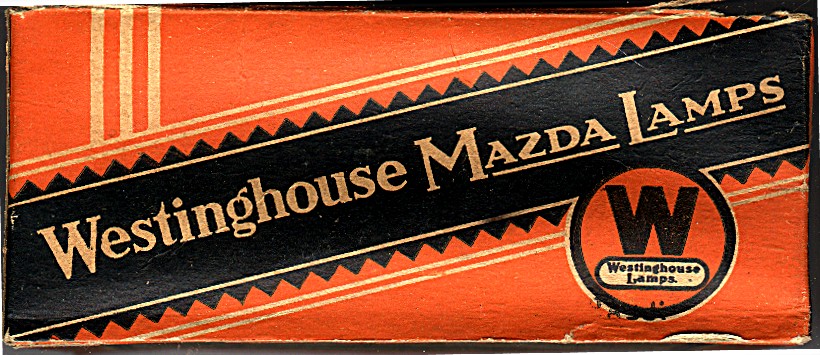
The "MAZDA" name was first used by General
Electric. The name was taken |
 |
| 1909 |
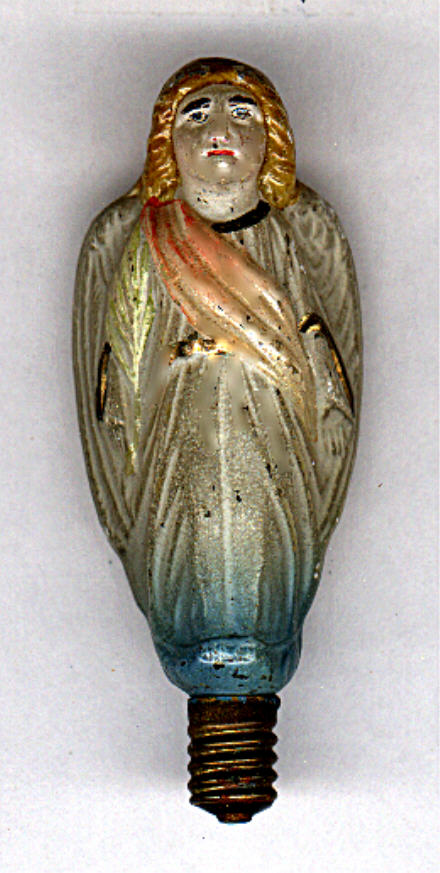
Austrian figural lights first became available in the United States, and were manufactured by The Kremenetzky Company. The earliest of these lamps can be identified by an ivory or porcelain insulator in the base, and the brass base itself is lathe-turned rather than machine stamped. (Lathe-turned bases can be easily identified under magnification by the sharply formed threads and thick brass.) Although beautifully painted and molded in great detail, these lamps had serious problems with flaking paint, and the clear glass that was revealed when the paint flaked off was not attractive. |
 |
| 1910 |
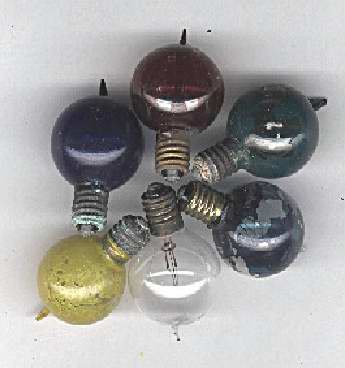
The General Electric Company begins to change the shape of their Christmas lamps from the traditional pear shape to a perfectly round globe. The lamps still had an exhaust tip at the top, and carbon filaments. |
 |
| 1912 |
The General Electric Company now uses and licenses the MAZDA trademark exclusively for the new tungsten filament lamps, and does not allow its use with carbon filament lamps. Tungsten burns more evenly and lasts far longer than carbon filaments. |
|
| 1916 |
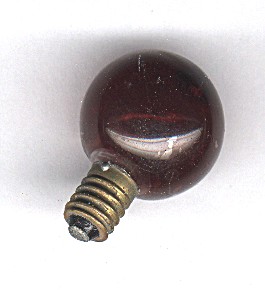
General Electric first uses tungsten filaments in their globe shaped Christmas lamps. This was the first common use of tungsten in Christmas lighting, although it had been in use for household lamps for several years. Tungsten filament globe lights can be found either with or without the exhaust tip on them. |
 |
| 1918 |
The use of carbon filaments in American Christmas light bulbs virtually disappears. Carbon filaments were still being offered in less expensive imported figural lamps. |
|
| 1920 |
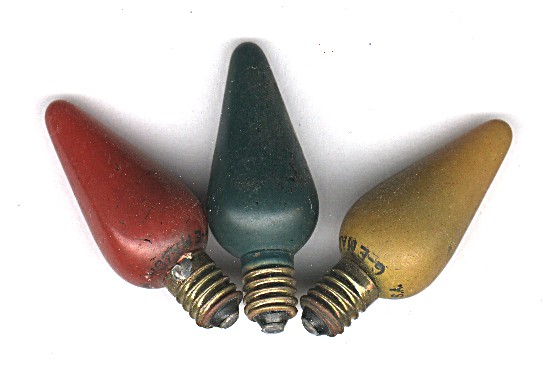
General Electric offers for the first time a flame or cone shaped Christmas lamp, with a tungsten filament. This shape was soon to become the industry standard, manufactured until the early 1970s. The earliest of these cones are smooth and slightly larger than the later lamps which are ribbed. |
 |
| 1921 | The infant Underwriters Laboratories first tested and established standards for American electric Christmas light strings. The UL safety designation quickly became an effective sales and marketing tool. The earliest outfits merely state that they are "Approved Lighting Outfits", while later sets carried the familiar UL seal of approval, either printed on the box or found on a paper tag on the cord. | |
|
The Timeline continues... CLICK HERE FOR THE TABLE OF CONTENTS PAGE AND LINKS TO ALL PAGES ON THIS SITE TABLE OF CONTENTS HISTORY THE TIMELINE MANUFACTURER'S HISTORIES THE PATENT PAGES THE PRE-ELECTRIC ERA VINTAGE ADVERTISING THE LIGHT SET GALLERIES RELATED LINKS |
||
|
Note: OldChristmasTreeLights? and FamilyChristmasOnline? are trademarks of Breakthrough Communications? (www.btcomm.com).
|

 | ||||||
| Visit our affiliated sites: | ||||||
| - Christmas Memories and Collectibles - | ||||||
 |

|
|
 |

|
 |
|
| - Family Activities and Crafts - | ||||||
 |
|

|

|
|
|
|
| - Music - | ||||||

|
|
 |

|

|

|
|
| - Trains and Hobbies - | ||||||
 |
 |
 |
 |
 |  |
|

|

|
|  |
|

|
|