The Morris Propp Story
|
|
Few people have contributed more
to electric Christmas lighting than did industry pioneer Morris
Propp, the founder of the M. Propp Company, one of the very first
electric Christmas lighting concerns. His story is one of hard work and
strong family values.
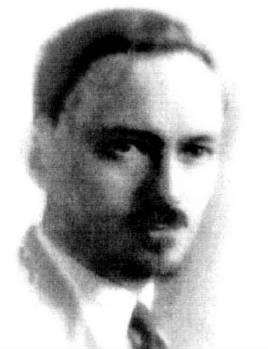
It was Morris, more than any other person, who promoted and popularized the practice of lighting trees with electricity. Here is his story... |
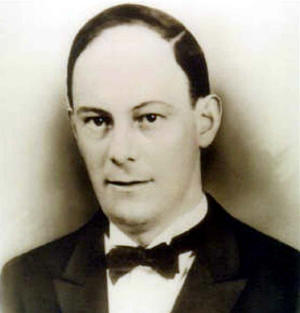
| Morris
Propp was born in May of 1884 in Russia, and his family came to the
United States in 1893. As a child, he attended schools both in South
Norfolk, Connecticut and New York City. In 1901, when he was seventeen
years of age, Morris went to work for his sister, Anna Propp Glasgow,
at her store in New York City. A hard and diligent worker despite his
youth, he toiled horribly long hours, usually working from 6:00 A.M.
until 11:00 P.M. every day.
Due to
his hard work, Morris was able to save enough money to seek
employment on his own later that same year. A During
these early days of the century, Morris demonstrated his
wonderful aptitude for business by quickly capitalizing on the growing
public interest in electrical illumination. He soon added
electrical accessories and fixtures to his line of wares, and it
was not long after that he was actually manufacturing and selling
electrical accessories of his own. In 1907, Morris' brother Louis
joined him to work in the business. In 1910, Morris married Anna Cohen.
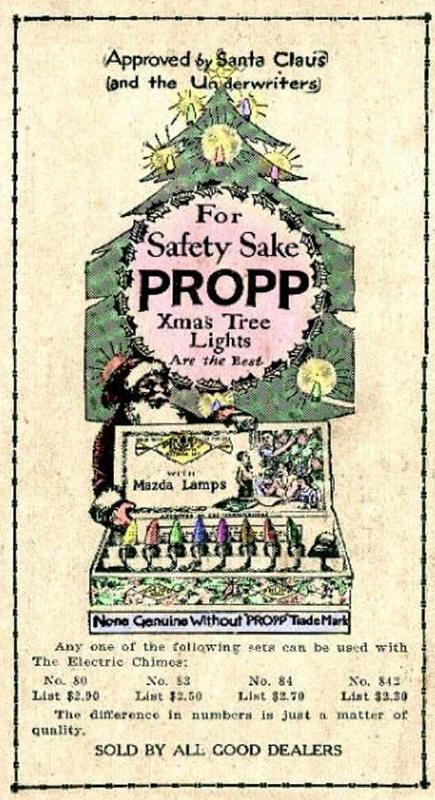
Once again Morris Propp's business skills would be called into play. As the first decade of the century faded into the second, public awareness of electrical Christmas decorations was heightened by a judicious but extensive advertising campaign sponsored by Morris' company. Propp electrical accessories were in widespread use by this time, with their line of Christmas lights leading the way. Almost all of the popular women's magazines of the day included Propp ads for Christmas lights during the season, as well as many trade publications and scientific journals. Here is an example of one such ad: Wisely, all of the Propp Christmas light sets from the early 1920s and onward included the "One-4-All" connectors, allowing their use with just about any other company's brand of attachments. This allowed Morris' sets to be instantly compatible with those offered by his competitors, and sales increased even more. The safety of Propp sets was loudly touted in the advertisements as well, for many people were still afraid of electricity, despite the more obvious dangers of using candles on their trees. The sets were approved for safety by the infant Underwriters Laboratories, and many advertisements proclaimed that Propp outfits were "Approved by Santa Claus and the Underwriters!" What more could anyone ask for? Continued... |
|
TABLE OF CONTENTS HISTORY THE TIMELINE MANUFACTURER'S HISTORIES THE PATENT PAGES THE PRE-ELECTRIC ERA VINTAGE ADVERTISING THE LIGHT SET GALLERIES RELATED LINKS |
|
Note: OldChristmasTreeLights? and FamilyChristmasOnline? are trademarks of Breakthrough Communications? (www.btcomm.com).
|

 | ||||||
| Visit our affiliated sites: | ||||||
| - Christmas Memories and Collectibles - | ||||||
 |

|
|
 |

|
 |
|
| - Family Activities and Crafts - | ||||||
 |
|

|

|
|
|
|
| - Music - | ||||||

|
|
 |

|
|

|
|
| - Trains and Hobbies - | ||||||
 |
 |
 |
 |
 |  |
|

|

|

|  |
|

|
|